Many managed travel programs now collect travel-related carbon emissions data, but fewer bring that data into the booking moment where choices are made. BTN Intelligence’s 2025 survey found that 51% of travel managers are tasked with gathering emissions data, while 42% aim to make CO₂ emissions visible at the point of sale.
The reason is simple. Decisions are made in booking flows, not in dashboards. Carbon emission data only becomes useful when it is visible at the moment of choice.
For travel managers, this is where impact happens:
✓ Shifting traveler behavior
✓ Improving policy compliance
✓ Reducing emissions intensity
✓ Maintaining cost efficiency
To achieve this, an organization should embed sustainability directly into the booking experience.
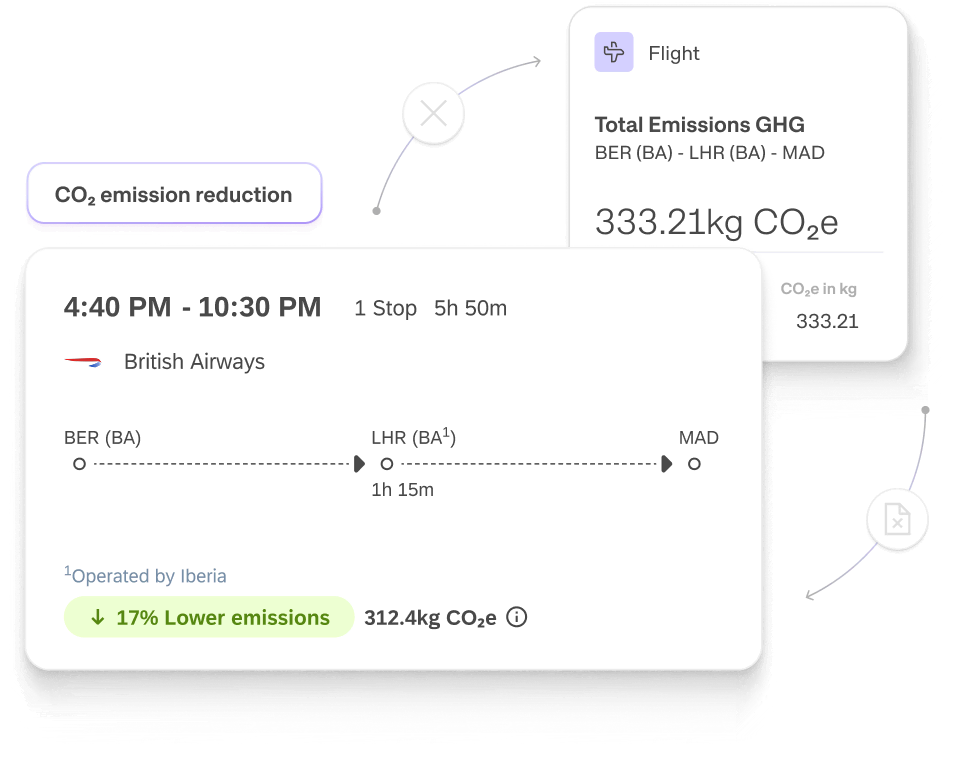
Travel managers balance multiple priorities:
Policies define intent, but they do not drive decisions on their own.
In practice, defaults, ranking, and friction costs shape behavior far more than policy documents.
If more sustainable options require extra effort, they are rarely chosen.
Effective programs guide decisions inside the booking flow, without adding friction.
When emissions calculations are integrated into booking systems, travel managers gain clear visibility into travel patterns.
Carbon emissions data highlights:
> This allows targeted actions instead of broad restrictions.
When travelers see emissions data:
> This only works if calculations are consistent and comparable across options.
Carbon emissions data allows policies to be implemented more effectively:
> Policies become easier to apply and justify.
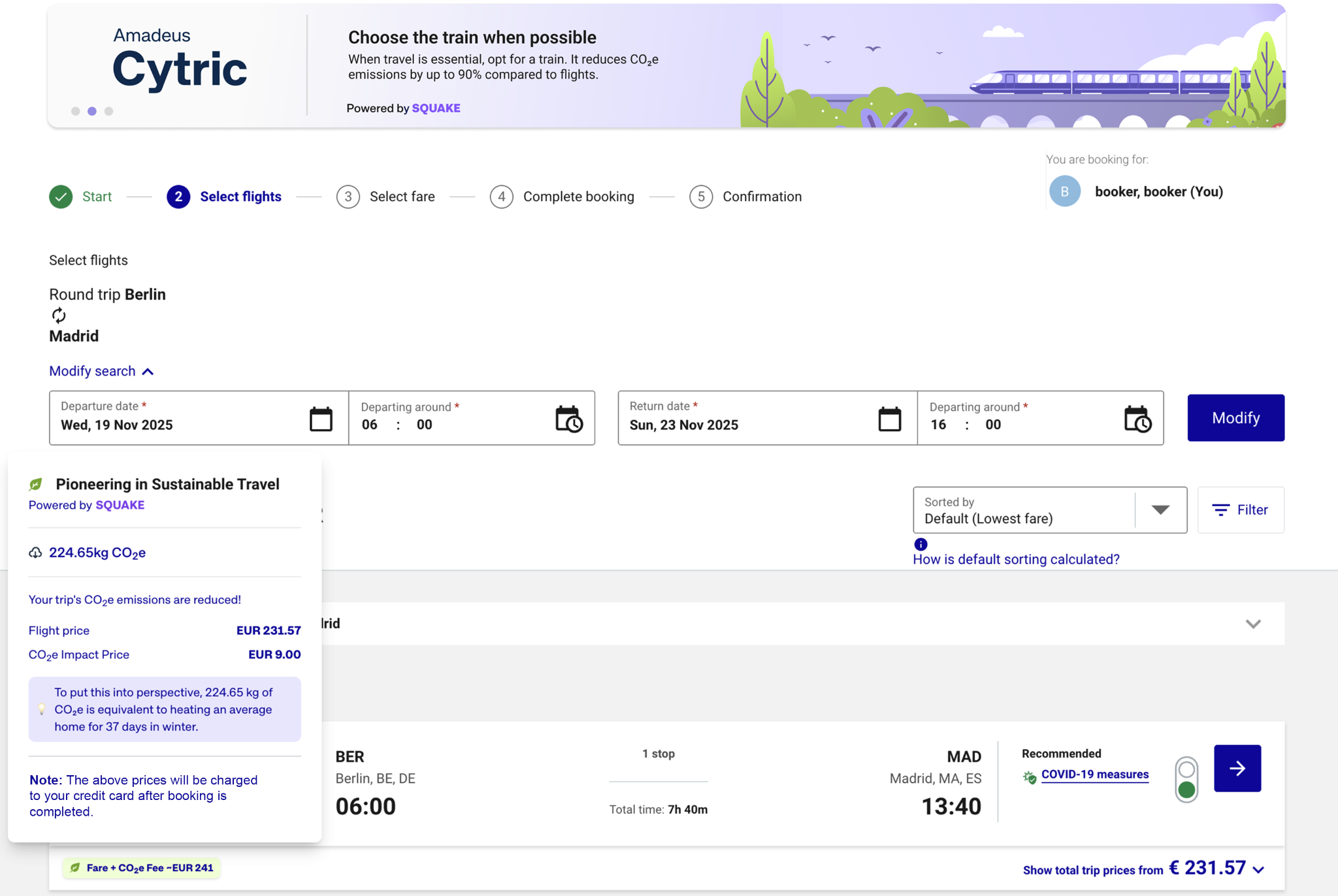
If emissions data is only available after the trip, it is much less likely to influence behavior. When integrated into booking platforms such as Amadeus Cytric:
✓ Travelers see impact immediately
✓ Lower-emissions options are visible
✓ Policy rules are applied in context
✓ Approvals and controls are embedded
This shifts the choice on more sustainable travel options from reporting to operational decision-making.
In practice, this is implemented through defaults, ranking, and clear policy rules embedded directly into the booking flow, supported by emissions calculation infrastructure that integrates directly into booking systems.
Carbon emissions data also enables structured measurement.
Key indicators include:
> This allows organizations to track progress and improve over time.
Point-of-booking carbon emissions data strengthens governance by enabling clear targets, policy controls through rules and approvals, and accountability across Travel, Sustainability, Finance and Procurement areas.
Across European organizations, effective programs focus on:
More sustainable practices become effective when it is part of daily workflows.
1. Why is carbon emissions data visibility at booking important?
Because decisions are made at that moment, not after the trip.
2. Does it increase complexity?
No. When integrated properly, it can simplify decision-making.
3. How can impact be measured?
Through adoption rates, emissions intensity and policy compliance.
For companies using platforms such as Cytric, SQUAKE provides the infrastructure that enables this integration—calculating emissions for every trip, providing transparent methodologies, and supporting climate contribution for residual emissions.
This allows organizations to move from reporting to real operational impact.
For further information or to discuss how more sustainable travel can create measurable business value, you can contact the SQUAKE team here.
Subscribe to our newsletter
Achieve your climate targets. Get helpful tips and industry updates.
Stay connected with us
Follow us on our social media networks